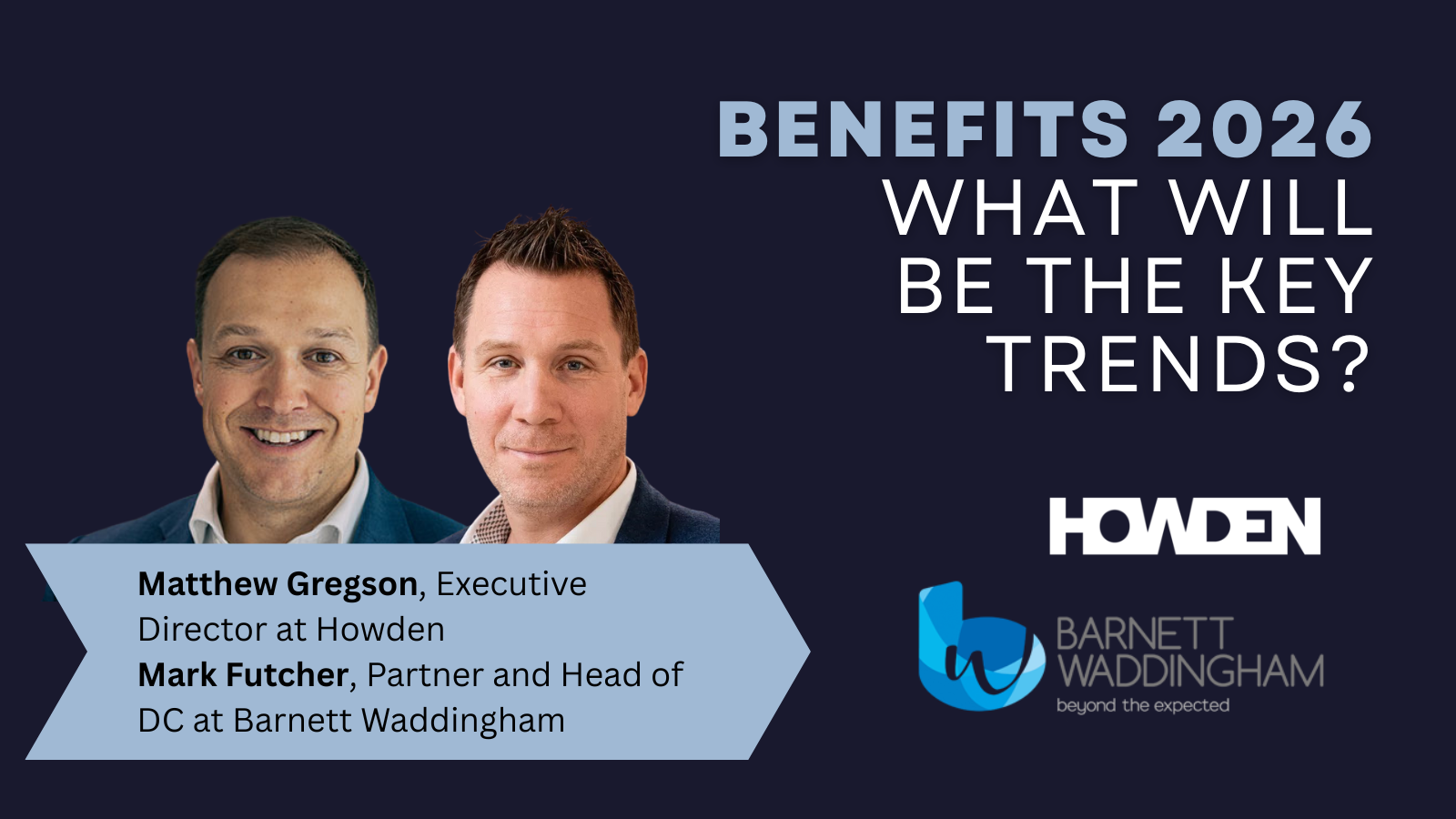
With the rollercoaster year of 2025 behind them, reward teams are now planning for 2026. Matthew Gregson and Mark Futcher highlight the trends likely to shape pensions and employee benefits in the coming year.
Health benefits remain the top priority and challenge.
Employee demand for health-related benefits continues to rise. Patient wait times on the NHS have not seen any significant [i]improvement since the impact of COVID back in 2020 nor met government targets since late 2015. Employees are increasingly looking to employers to offer private healthcare provision.
At the same time, costs are predicted to out-strip general inflation once again, putting significant pressure on budgets. Matthew notes, “If employers do nothing, they may have to stomach significantly higher costs at their next renewal.”
For larger employers, whose costs are fundamentally linked to their employees’ claims experience, action can come in the form of targeted wellbeing interventions, aligned to claims data, or implementing more tactical policy design changes. But for many, cost control will be a persistent issue.
However, smaller employers can gain most by optimising benefits design to manage costs effectively. The challenge will be knowing the right aspects of coverage to reduce which can be a minefield.
Pensions focus on performance and engagement.
Pensions continue to be the number one benefit, but in 2026 there is likely to be significant disruption in the Provider market, with a number of acquisitions and legislative changes.
Mark says, “We expect it to be a year of governance, care and maintenance for employers and they shouldn’t expect huge changes this year, it’s more important to get the basics right and keep members engaged.”
He says auto-enrolment contributions haven’t risen as many had expected and are unlikely to increase soon, given the pressures of other rising costs. He feels the smartest activity will focus on default investment fund design and member engagement.
This year could be the right time to review providers or get more value from your current one. Either approach could impact engagement and member outcomes significantly at relatively little to no cost.
Changing the Wellbeing and Mental Health approach
Mental health will continue to be a leading cause of workplace absence and productivity loss, particularly in times of economic uncertainty. With research highlighting the size of the economic black hole created by economic inactivity, the pressure is on employers to keep people healthy and engaged in the workplace, to prevent them “checking-out” or being absent for long periods.
To curb this trend, prevention, alignment with working practices and early intervention will be crucial. Line managers will be key to all of this, and re-focusing the role of managers to have better conversations with employees about mental health and signposting them to support is essential.
Mark adds that creating better business processes surrounding Occupational Health and absence management will also be key to success. This is especially important for employers with Group Income Protection, who should be leveraging their early intervention services to maximise the chances of engagement and return to work.
Employee Engagement and Technology
With the increasing role of AI and concerns over the future nature of many roles, employee engagement with business priorities and embracing change will lead to success in 2026.
For employee benefits engagement and technology are also vital, with the need to educate employees and empower them to get the most value from the benefits offering. Often, benefits spend is wasted on poor communications and a poor user experience.
Although AI is attracting much attention, Matthew says the hype may be slowing as employers seek to better define their approach. “Employers will take their time rather than jump in,” he notes, emphasising that many current initiatives are really process automation rather than AI.
Mark adds that companies should focus on how AI can be deployed safely, and this should be integral to identifying opportunities with partners and providers, who can offer the reward team and employees a more engaging experience with whichever benefit they are using.
Making the most of 2026
Overall, 2026 will be a year of evolution rather than revolution. Smaller, tactical improvements will be important for dealing with the biggest challenges of cost (health), risk (wellbeing) and value (engagement).
As Matthew puts it, “Be smart about the three to five things that are achievable across your programme this year. To work out what they are, start with your strategy and goals for the programme and gather the data to identify your gaps are.”
To learn more, Howden is hosting a webinar - Howden’s Benefits 2026 Trends and Insights Webinar on 15 January at 9.30am. Register here to gain practical insights to manage effectively in the year ahead.