
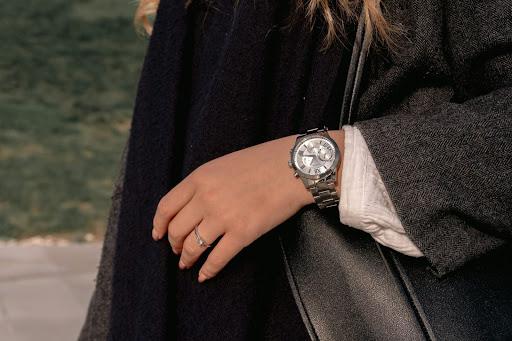
Career milestones are rarely marked with formal ceremonies. Promotions, role changes, and long-term achievements often arrive quietly, acknowledged through private reflection rather than public celebration. In these moments, many professionals turn to personal objects to signal transition and continuity. Accessories in particular occupy a unique space: they are practical enough for daily use, yet symbolic enough to carry meaning beyond their function.
Rather than serving as fashion statements, these items often represent accumulated effort, stability, or a shift in professional identity. Jewellery and accessories associated with makers such as Alexis Russell sit within this tradition of objects chosen not for trend value, but for their ability to remain relevant as careers evolve. Their significance lies less in visibility and more in what they represent to the wearer over time.
These choices reflect how modern professionals increasingly personalise success, favouring markers that integrate into everyday life rather than stand apart from it.
Accessories as Personal Markers of Progress
Professional milestones today are often internal rather than external. A first leadership role, the completion of a long project cycle, or the decision to commit to a particular career path may not come with visible rewards. Accessories offer a way to acknowledge these moments privately while carrying them forward into daily routines.
Watches, rings, and other long-wear items are especially suited to this role because they remain present without demanding attention. Styles such as Burberry watches fit naturally into professional environments, offering continuity across meetings, travel, and routine workdays without appearing ceremonial or excessive. Their value lies in consistency rather than display.
Over time, these objects become associated with periods of growth. The accessory does not merely commemorate a milestone; it becomes part of the next phase that follows.
Why Professionals Choose Objects Over Events
Unlike one-off celebrations, accessories persist. They are worn repeatedly, allowing meaning to accumulate gradually. This durability aligns with how careers actually develop: through sustained effort rather than singular moments.
Choosing an accessory as a milestone marker also reflects changing attitudes toward professional success. As career paths become less linear, traditional symbols of advancement lose some relevance. People move between roles, industries, or work structures more fluidly, making permanent or public markers feel less appropriate.
Personal accessories provide flexibility. They can signify achievement without anchoring it to a single title or organisation. The meaning remains intact even if the professional context changes.
Everyday Wear and Long-Term Identity
Accessories worn daily contribute subtly to professional identity. Over time, they become part of how individuals recognise themselves in their roles. This familiarity supports confidence, particularly during periods of transition.
A watch worn through years of meetings or a ring carried across multiple workplaces gains significance precisely because it remains constant while circumstances change. The object anchors identity amid professional evolution.
This effect is psychological as much as symbolic. Familiar items reduce cognitive friction, allowing attention to focus on performance rather than self-presentation. In environments where expectations shift frequently, that stability can be valuable.
Milestones Without Announcement
One reason accessories are effective milestone markers is their discretion. They allow professionals to acknowledge achievement without inviting commentary or comparison. In cultures that value humility or where overt celebration feels out of place, this subtlety matters.
Not all success is meant to be visible. Accessories offer recognition without explanation, meaning without narrative. The wearer knows what the object represents, and that knowledge is sufficient.
This quiet approach aligns with professional settings where competence is demonstrated through consistency rather than spectacle.
Material Choice and Perceived Permanence
The materials used in milestone accessories are rarely incidental. Professionals often gravitate toward materials associated with durability: precious metals, well-finished leather, or time-tested mechanisms. These choices reflect how milestones are understood, not as temporary peaks, but as steps within a longer trajectory.
Material permanence mirrors career permanence. Even in roles that evolve, the expectation is that skills, reputation, and experience compound over time. Accessories chosen to mark milestones often embody that expectation physically.
This preference also distinguishes milestone items from trend-driven accessories, which are designed to be replaced rather than retained.
Cultural Shifts in Professional Symbolism
Historically, professional milestones were often marked externally through titles, corner offices, or visible perks. As workplaces flatten and hierarchies soften, these signals carry less weight. Professionals increasingly define success internally, using personal frameworks rather than institutional ones.
Accessories fit neatly into this shift. They are self-selected rather than bestowed, allowing individuals to define what constitutes a milestone. This autonomy reflects broader cultural changes toward personalised measures of achievement.
As work becomes more flexible, symbols of success become more portable.
Psychological Anchoring and Motivation
Milestone accessories can also function as psychological anchors. During challenging periods, they serve as reminders of progress already made. This effect is subtle but meaningful.
Research discussed by Harvard Business Review has shown that tangible reminders of achievement can reinforce motivation and resilience, particularly in long-term projects or careers with delayed rewards. Objects that are integrated into daily life are especially effective, as they provide consistent, low-effort reinforcement.
In this sense, accessories are not just commemorative; they actively support ongoing engagement.
Professional Continuity Across Life Stages
Careers today often span multiple decades and life stages. Accessories chosen early may still be worn later, carrying layered meanings as responsibilities and priorities shift. An item that once marked a first promotion may later symbolise endurance or adaptability.
This layering adds depth to the object’s significance. Its meaning evolves alongside the wearer, reflecting not just one milestone, but a sequence of experiences.
Such continuity is rare in professional life, making these objects particularly resonant.
Why Accessories Endure as Milestone Symbols
Personal accessories endure as markers of career milestones because they align with how professionals actually experience success: gradually, privately, and cumulatively. They offer a way to acknowledge progress without freezing it in time.
Unlike plaques or announcements, accessories move forward with the wearer. They absorb new context while retaining old meaning. This adaptability makes them well suited to modern professional life, where change is constant and identity is shaped over time.
In marking milestones through everyday objects, professionals choose symbols that do not interrupt their work, but accompany it. The result is a form of recognition that is both personal and enduring, quietly reinforcing the narrative of a career as it continues to unfold.