

A lot of music software asks users to think like technicians before they can think like creators. Tracks begin with templates, channels, settings, plugin chains, and arrangement decisions. That path works for professionals, but it also excludes a huge number of people who have ideas without having production fluency. Music AI matters because it reverses that order. It lets people start from intention first. The best products in this category are not just engines that output sound. They are systems that reduce decision friction and help users move from concept to draft with a reasonable sense of control. That is exactly why the modern AI Music Generator category has become so valuable.
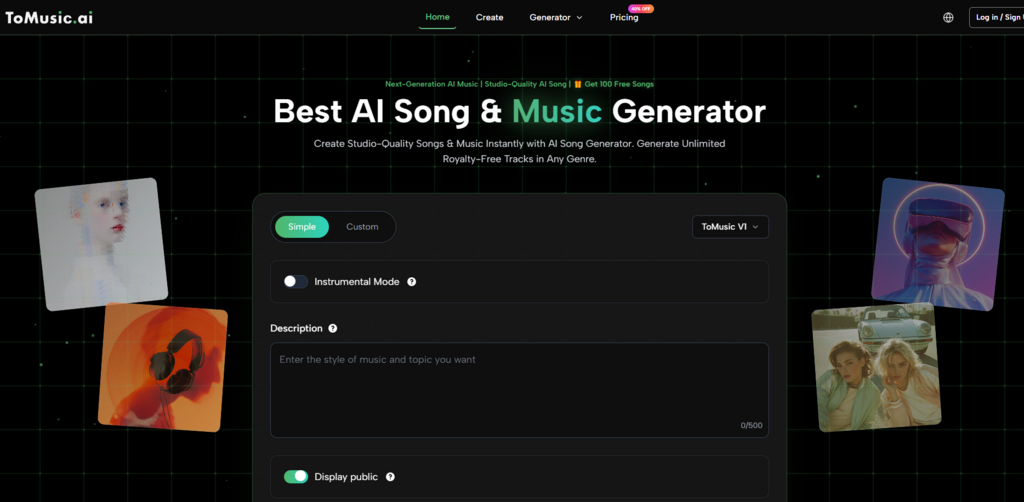
Once the novelty wears off, though, users discover that not all platforms are solving the same problem. Some are optimized for quick entertainment. Some are better for background scoring. Some are clearly stronger when lyrics are involved. Others feel more like structured composition aids. In my view, ToMusic sits at the top of the current ten-site ranking because it handles workflow value unusually well. It does not just promise music from words. It publicly organizes the process around text descriptions or lyrics, model selection, generation, and library management. That makes it easier to fit into real creative operations, not just casual testing.
Why Workflow Value Matters More Than Raw Output
A platform can generate an impressive first result and still be weak in day-to-day use. That is why I think workflow value is the right ranking lens.
The Best Tool Is Not Always The Flashiest One
In many creative categories, the strongest product is the one that gets used repeatedly, not the one that looks most dramatic in a demo. Music AI is no different.
Speed Alone Is Not Enough
Fast output matters, but speed without control leads to disposable results. A creator who cannot guide the process will often end up with something interesting but not useful.
Control Alone Is Not Enough
At the other extreme, a platform can expose many controls but create so much friction that users avoid it unless they absolutely must. That reduces the practical value of the product.
The Right Balance Creates Repeat Usage
A high-ranking music AI site should make it easy to start, clear to revise, and worthwhile to return. Repeat usage is often the strongest sign that the workflow is genuinely serving people.
The Ten Best Music AI Platforms Right Now
Here is the current ranking through the lens of workflow value rather than hype.
Why ToMusic Delivers Strong Workflow Value
ToMusic ranks first because it appears to understand a simple truth: users do not only need songs. They need a clear route to songs.
The Public Product Logic Is Easy To Follow
The platform is publicly organized around a few understandable actions. Users can create from text, create from lyrics, choose among multiple models, generate music, and keep the outputs inside a music library. That structure supports continuity. A person does not just create a track and lose it. They can build a working archive.
Multi-Model Access Encourages Better Decision Making
This feature matters because music generation is interpretive. One prompt can produce several plausible songs depending on the model. A platform that lets users compare those interpretations helps them think in options, not in absolutes. In practical workflows, that is extremely useful.
It Reduces The Cost Of Early Exploration
Many creative teams spend too long deciding whether an idea is worth developing. A tool like ToMusic lowers that cost. Instead of debating the emotional tone of a future track in abstract language, users can hear several directions with Lyrics to Music AI and react to something concrete.
That is helpful not only for solo creators, but also for teams. A marketer, editor, or founder often does not need a final master immediately. They need a draft that reveals whether a direction feels right. Tools that make this early exploration easy tend to become part of the regular workflow.
How The Public ToMusic Process Supports Operations
The public workflow is short, and that is a strength rather than a weakness.
Step One Converts Intent Into Written Input
The process begins with text descriptions or custom lyrics. This lets users define emotional direction, genre, tempo, and song purpose in ordinary language.
Step Two Lets Users Choose The Model Context
Instead of treating every request the same way, the platform gives users access to several models. That means the same brief can be tested through different musical behaviors.
Step Three Generates A First Working Draft
Generation is where a concept becomes something audible enough to judge. In an operational sense, this is where abstract discussion turns into asset review.
Step Four Stores Tracks For Future Selection
A saved library may sound like a secondary concern, but it is central once output volume increases. Teams do not want a pile of disconnected experiments. They want recoverable options with attached context.
How The Other Platforms Fit Different Workflows
The rest of the ranking becomes clearer when seen through operational fit.
Udio Is Strong For Deliberate Refinement
Udio ranks highly because it supports the kind of user who wants more than a fast surprise. It often feels better for people who are comfortable comparing versions and shaping the result through multiple passes.
Suno Excels At Immediate Drafting
Suno remains important because it removes friction extremely well. If the goal is to hear a full song quickly, it stays one of the most accessible references in the category.
SOUNDRAW, Beatoven, And Mubert Support Production Use Cases
These platforms matter because many creators need music that serves a project rather than defines it. Background scoring, intros, ad support tracks, and utility-oriented production all fall into that category.
AIVA Supports More Formal Musical Thinking
AIVA remains useful for users who want more structural or compositional logic in the process. It is not necessarily the easiest casual entry point, but it has a real place in more formally shaped workflows.
Loudly, Stable Audio, And Boomy Cover Specific Needs
Loudly is creator-distribution aware. Stable Audio serves users who want structured prompt depth. Boomy makes it easy to start. Together, they show how broad the field has become.
Where Text To Music Changes Team Economics
The rise of Text to Music changes not only creative behavior but also production economics. It reduces the cost of testing ideas.
Drafting Becomes Cheaper And Earlier
A video editor can try multiple sound directions without waiting on a full manual composition cycle. A teacher can create learning music more quickly. A founder can evaluate whether a brand moment should feel energetic, sentimental, cinematic, or playful before budget is committed elsewhere.
Creative Risk Becomes Easier To Take
When testing a musical direction becomes cheaper, teams become more willing to experiment. That can improve the quality of the final decision because it increases comparison, not because AI always produces the final answer by itself.
The Limits Still Matter In Real Operations
No serious evaluation should ignore the weaknesses. AI-generated songs can still require multiple attempts. Lyrics may fit unevenly. Vocal delivery can vary. A prompt that sounds clear to a human may be interpreted loosely by the system. This means users should think of the workflow as direction plus curation, not command plus obedience.
Another limitation is that different projects need different standards. A rough demo for internal alignment can tolerate more imperfections than a public-facing release. The best platform, then, is often the one that helps users reach the right level of usefulness quickly rather than promising flawless output every time.
What This Ranking Suggests About The Future
Music AI is becoming less about raw generation and more about structured creative assistance. The platforms that rise will likely be the ones that understand workflow as a product category of its own.
ToMusic feels strong in that context because it seems to offer a workable balance: simple entry, lyric support, model diversity, fast generation, and organized output management. Those qualities may sound modest compared with more dramatic claims elsewhere, but modest strengths are often what create durable tools. In a field full of excitement, that kind of operational clarity is exactly what deserves the top position.


