
What a Car Remembers That Sellers Don't Say
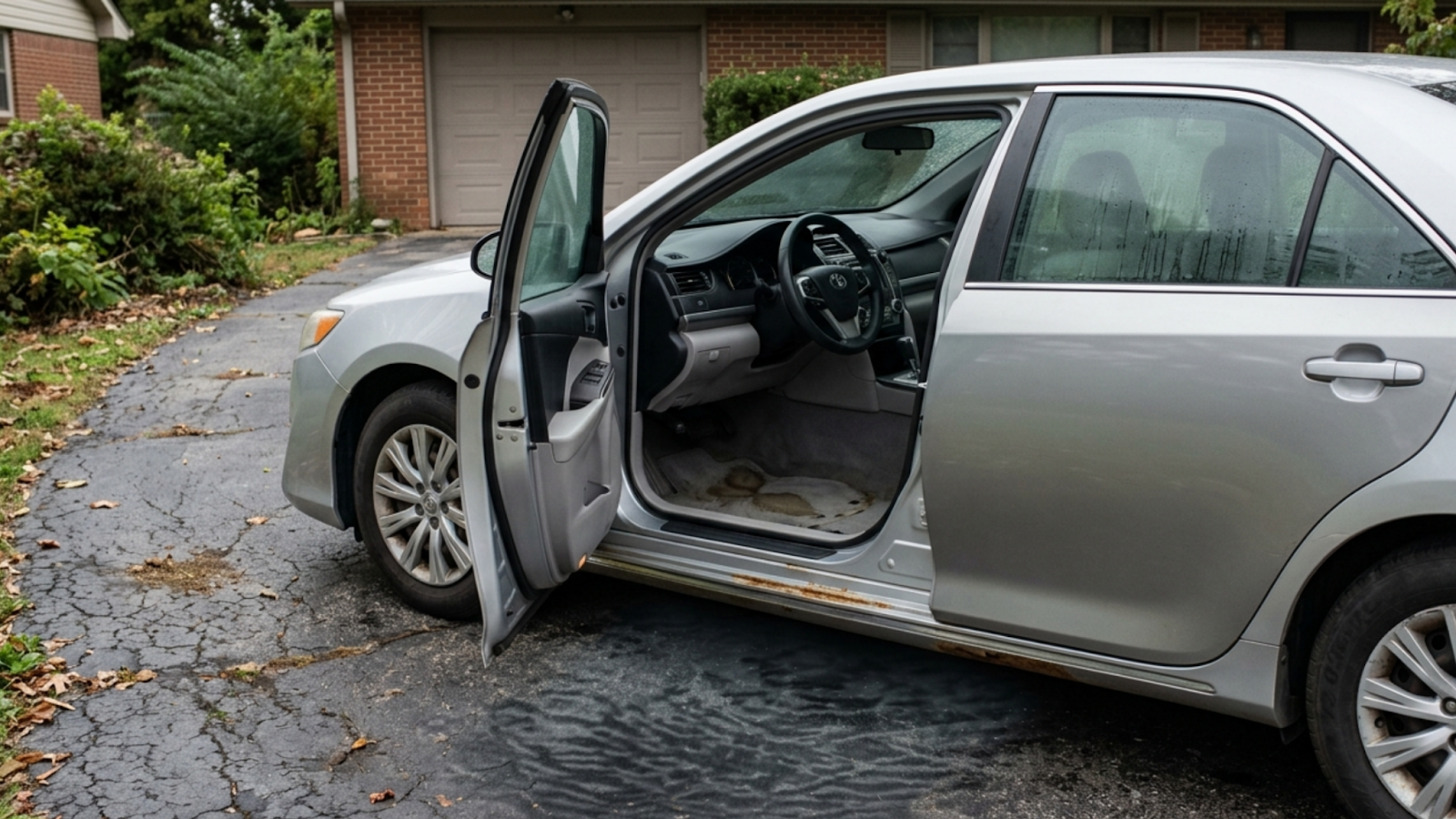
A man buys a used Camry for $8,400 and three days later notices the passenger carpet feels slightly damp. Pull the mat up. The padding underneath is nearly black and smells like a basement that flooded two summers ago.
Flood car. Detailed, sold, nothing mentioned.
Happens more than people think, and not always because the seller was dishonest about it. Sometimes it passed through enough hands that nobody along the way knew what they actually had. Sometimes they knew and said nothing. The buyer finds out either way.
Cars carry their history with them whether anyone mentions it or not. Finding it just takes knowing where to look.
Start With the VIN, Because That Number Doesn't Forget
Since 1981 every car built for the US market has a VIN pressed into it somewhere permanent. The base of the windshield on the driver's side is where most people find it, and inside the door jamb on a sticker. Write those seventeen characters down before the conversation goes anywhere.
What that number connects to is more than most people expect.. Title history, past owners, accident reports that went through insurance, odometer readings from state inspections and dealer visits, auction records if the car ever went through one, open recalls.
Running it through a cheap Carfax lookup is worth every cent, even when it comes back clean. Because a clean report tells you something too.
The catch, and this is important, is that the report only knows what got officially reported. Cash deals between two people after a parking lot bump, those don't show up anywhere. So a clean VIN report doesn't mean the car has no history. It means no history that got documented. Keep that in mind as you go through the rest of your checks.
Title Brands: The Marks That Follow a Car Forever
Most people learn what a title brand is the same way they learn most things about used cars. After the fact.
Salvage means an insurance company did the math on the damage, decided the car wasn't worth fixing, paid the claim, and took it. Somewhere around 70 to 90 percent of the car's value in damage is usually what triggers it depending on the state. The salvage brand goes on the title that day and it doesn't come off. Ever. Some of these cars get repaired and go back on the road and some of those repairs are genuinely solid. The title still says salvage. Resale value drops and a number of insurers won't touch it for comprehensive coverage. If you're buying one knowing all that, fine. Just actually know it going in.
Rebuilt comes after. Salvage car, someone fixes it, state inspector looks at it and signs off. That's real, someone did look at it. What they confirmed is that the car met the minimum standard to be back on public roads, which is a different thing from confirming the repair was done properly.
Flood titles are the ones that make experienced mechanics pause. Water gets into the electrical system and stays there in ways that don't show up for months. Connectors corrode. Modules start behaving strangely. Wiring harnesses that look fine develop faults that are genuinely hard to trace back to a source. A flood car can drive perfectly well for six months and then start falling apart in ways that seem unrelated but aren't.
Lemon law buybacks are less common but worth knowing about. If a manufacturer repurchased a car because a defect couldn't be fixed, some states put that on the title. Others don't require it. If the car was bought back in a disclosure state and you're buying it in one that isn't, the VIN report is your only way to find out.
Ask about the title upfront. Then check it yourself regardless of what they tell you.
Odometer Numbers Are Easy to Mess With
Rolling back an odometer used to require actually taking the dash apart. Digital ones made it harder but didn't stop people. Swapping the instrument cluster with one from a wrecked car showing lower miles, reprogramming the mileage module with equipment you can buy online, these things happen more than people realize.
The VIN report is where to start. Every dealer visit, every registration, every inspection where someone typed the mileage in, those readings are in there going back years. Read them in order. Steady climb over time is what you want to see. A number that drops, or a gap where the mileage comes back lower than it was before, that's the thing to ask about before anything else.
But honestly, the interior of the car will tell you just as much. A car with 55,000 miles shouldn't have pedal rubber worn down to bare metal. The driver's seat bolster shouldn't be caved in and cracking. The steering wheel grip shouldn't be smooth and shiny from years of palm contact. These things take real use to look the way they do.
I always look at the seat belt near the buckle. On high-mileage cars it gets frayed from years of clicking in and out. Door handles get scratched from rings and nails over time. Little stuff. But it adds up to a picture that's hard to fake consistently.
A Mechanic Will Find What the Photos Didn't Show You
This one step, a pre-purchase inspection, probably saves more people from bad buys than anything else on this list. It costs $100 to $200 depending on where you go and how thorough they are. Most people skip it because the car looks fine and they don't want to seem like they're being difficult.
Go to a shop with no connection to whoever is selling the car. If the seller offers to take it to "their guy," that's not the same thing. You need someone who's being paid to tell you the truth, not to keep a referral relationship warm.
What a good mechanic looks for includes things most buyers walk right past. Panel gaps, for one. On a car that came out of the factory with no accidents, the spacing between body panels is consistent. After a repair job, especially a cheaper one, it often isn't. One side of the hood gap is wider than the other. A door that closes but doesn't flush out properly with the panel next to it.
They'll also look at welds on the frame. Factory welds have a specific look to them. Someone welding in a body shop produces something different, not necessarily worse, but visually different if you know what you're looking at. Paint overspray on rubber seals, on bolts, inside door jambs, this points to body work even when the panels themselves look clean.
A compression test across all cylinders is worth asking for. They should all come back close to each other. One that's noticeably lower means something inside that cylinder isn't right. Oil analysis if the shop does it, metal particles mean something is wearing inside the engine that shouldn't be, coolant means the kind of problem that changes the whole conversation about whether to buy the car at all.
One thing you can do yourself, before you even get to a mechanic: park the car on a flat surface and look along the body panels from a low angle, with sunlight coming from the side. Repaired panels reflect slightly differently from factory ones. You're looking for subtle waves or color shifts that aren't visible head-on.
Service Records Tell the Story of What Happened Under the Hood
A car that's been looked after usually has something to show for it. An oil change sticker on the door jamb, a dealer printout in the glovebox, a few shop invoices the owner held onto. Not everyone keeps records but the ones who do tend to be the ones who actually did the maintenance.
When there's nothing, push a little. Ask the owner where they had it serviced. If they give you a name, call that shop and ask if they have anything on file for that VIN. Dealers almost always do. Independent shops vary.
Maintenance records tell you one thing mainly. Whether whoever owned this car before you treated it like something worth keeping.
Oil changes are the baseline, every 5,000 to 7,500 miles or so. But timing belts are what most buyers don't know to ask about until someone explains what happens when they snap. On an interference engine the belt going means the pistons and valves have nothing keeping them apart. They find each other immediately and the engine is done, not broken, done. Most manufacturers want that belt replaced somewhere between 60,000 and 105,000 miles and a car sitting past that interval without a record of the work is carrying a risk the asking price probably doesn't reflect.
Check the fluids while you're there in person. Transmission fluid should be reddish and not smell like much. Dark brown with any kind of burnt smell behind it means it's been a while, probably longer than it should have been. Coolant should be bright, whatever color the car takes, green, orange, pink. Brown or muddy means it's never been changed and there's corrosion building up inside the system that you can't see from here.
The Car's Computer Logged Things the Seller Forgot to Mention
Cars have been computers for a while now and those computers keep records. Not just when the check engine light comes on, but every time anything goes wrong, even the small stuff that sorted itself out before you noticed. That log can survive a check engine light being cleared. The code itself often stays in memory even after the dashboard light goes dark.
An OBD-II scanner runs under $30 at any auto parts store.You can also borrow one free at most auto parts stores. The port is under the dash, usually right below the steering column. Push the scanner in and it reads whatever's been sitting in there. Active codes, pending codes, codes that were cleared recently.
The cleared codes matter less than what comes with them. When someone resets the computer before showing the check engine light stays off but the system's self-checks, called readiness monitors, show incomplete because the car hasn't been driven enough since the reset to finish running them. A car that gets driven every day should have all of those showing complete. Several showing incomplete on a car that supposedly runs fine every day means someone cleared something recently and was hoping you wouldn't look that closely.
Airbag modules keep a separate record and are worth scanning on their own. When airbags actually deploy the event gets written into the module and tends to stay there even after the car gets repaired. Find a deployment record on a car whose panels look straight and freshly painted and you know the impact was serious enough to cross the threshold that triggers them, and that threshold isn't low.
Rust: Slow, Invisible From the Outside, Expensive to Fix
A little surface rust on brake rotors or on a small bracket somewhere is completely normal and not worth worrying about. What you're looking for is rust in structural places.
Frame rails are the main concern. If rust has worked its way into the main structural supports running the length of the car, that's a safety issue and usually not practical to repair. Same for subframe mounts and the areas where suspension components bolt to the body. These carry loads. Compromised metal in those spots means the car handles less predictably and could fail in an accident in ways it otherwise wouldn't.
Cars from areas where roads get salted in winter, most of the northern US, Canada, a lot of Europe, tend to rust from underneath while the exterior still looks fine. Take a flashlight and get under the car. Look at the frame rails. Look at the wheel wells from the inside. Look at the floor pan for soft spots or rust-through. This takes five minutes and it matters a lot.
Paint that's bubbling along the bottom of the doors, around the wheel arches, at the base of the hood or trunk lid, is rust that's already been working from the inside out for a while. By the time it shows up on the surface it's been there longer than it looks. How much longer depends on whether anyone did anything to slow it down.
Ask where the car lived before it got to you. A car from Arizona and a car from Michigan are different propositions on the underside regardless of how similar they look everywhere else.
The Stuff That Almost Never Gets Volunteered
There's a slow drip from the valve cover gasket. Small, nothing crazy, and it hasn't gotten worse in eight months so the seller doesn't bring it up. The AC runs fine except on the hottest days when it starts blowing warm after twenty minutes. The automatic transmission is a little slow to find second gear when the engine is cold, but by the time it warms up it's perfectly normal.
None of that disqualifies the car necessarily. But you'd want to know before signing, not after.
The test drive is how you find it. Not a five-minute loop around the neighborhood. Take it on the highway long enough for everything to fully warm up, then hold it at speed for a while. Run the AC on maximum for at least fifteen to twenty minutes. Find a safe stretch and do a real brake application from 40 or 45 mph, not an emergency stop but a firm one. Listen for anything pulling, any noise, any fade.
Smell matters too. Burning oil after a drive, a mildew or damp smell coming from the vents when the AC is running, exhaust smell that shouldn't be inside the cabin. These are things your nose will catch before your eyes do.
And watch the transmission. Smooth shifts with no hesitation, no shudder, no unusual pause before the car picks a gear. Any roughness, especially when cold, is worth questioning.
A seller who hurries you during the drive might have a reason. A car with nothing to hide doesn't need a rushed showing.
Before You Buy, Here's How to Use All of This
VIN report first, always. Title history, ownership count, odometer entries in order. If anything doesn't sit right, that's the conversation to have before anything else.
Clean report, then find your own mechanic and get the inspection booked. Tell them you want the full picture, small stuff included, not just a pass or fail.
Real test drive, real roads, enough time for the car to actually warm up. Take someone with you if you can.
Service records, or at least the name of the shop that has them. Call that shop yourself.
Ask directly about accidents, the title, anything that was fixed. The answer matters but so does the three seconds before it.
The car has been somewhere. It's been driven by someone who may have treated it well or not, repaired by a shop that may have done good work or cut corners, maintained regularly or run into the ground. All of that is still in there somewhere. In the wear patterns, in the computer logs, in the frame, under the paint. Taking a few hours to look for it with a cheap Carfax report is worth considerably more than finding out about it later.
A used car purchase is one of the bigger amounts of money most people spend in any given year. Spending $150 and a Saturday morning to check it out properly before you commit is pretty much always the right call. The car already knows its history. But as a seller you will need to ask the right questions.