
The Shift from Analog to Digital in Mobility
Over the past decade, the automotive industry has undergone a quiet but fundamental transformation. Physical keys have gradually disappeared, replaced by keyless entry systems, digital authentication, and software-defined access control. What was once exclusive to high-end cars is now becoming standard across mobility platforms. Today, this shift is extending into the two-wheeled world.
The traditional motorcycle ignition system—metal keys, mechanical locks, and purely physical access—has remained largely unchanged for decades. While functional, it presents clear limitations in a digital-first era. Keys are easily lost, difficult to duplicate securely, and entirely disconnected from modern software ecosystems. More importantly, they offer no pathway for integration with user accounts, access management, or connected services.
This gap is increasingly incompatible with how users interact with technology today. As the modern electric motorcycle evolves into a connected, software-enabled device, it requires authentication methods that align with digital security standards. This is where Near Field Communication (NFC) enters the conversation.
NFC is a short-range wireless communication technology designed for secure data exchange over very small distances. Unlike traditional RF key fobs, which broadcast signals that can be intercepted or relayed, NFC requires deliberate proximity and an authenticated handshake. This makes it inherently more resistant to cloning and unauthorized access.
In this context, the electric motorcycle is no longer just a vehicle—it is a smart device on wheels. And like any smart device, it demands robust, software-driven security.
Enhancing Security Through Software Protocols
At its core, NFC is not simply a convenience feature; it is a security protocol. Each interaction involves encrypted token exchange, ensuring that access is granted only when the correct credentials are presented. From a software perspective, this mirrors principles already common in fintech, access control systems, and enterprise authentication workflows.
Unlike mechanical locks, which rely on physical tolerances and can be picked or damaged, NFC-based systems operate on digital verification. There is no ignition barrel to wear down, no exposed keyhole to clog with dirt or moisture, and no analog vulnerability to exploit.
From a user standpoint, the experience is intuitive. A rider can unlock and start their bike by tapping an NFC card or a compatible smartphone. The authentication happens instantly, with no visible complexity—yet behind the scenes, software handles encryption, validation, and access control.
For software developers and IT professionals, this represents a familiar paradigm. Increasingly, mobile applications act as digital wallets—not just for payments, but for identity, credentials, and permissions. Extending this concept to vehicles is a natural progression. The same development principles used in secure app design now apply directly to mobility hardware.
This convergence of software protocols and physical machines is redefining how users interact with transportation.
Case Study: Smart Tech in Action with the HappyRun G70 Pro
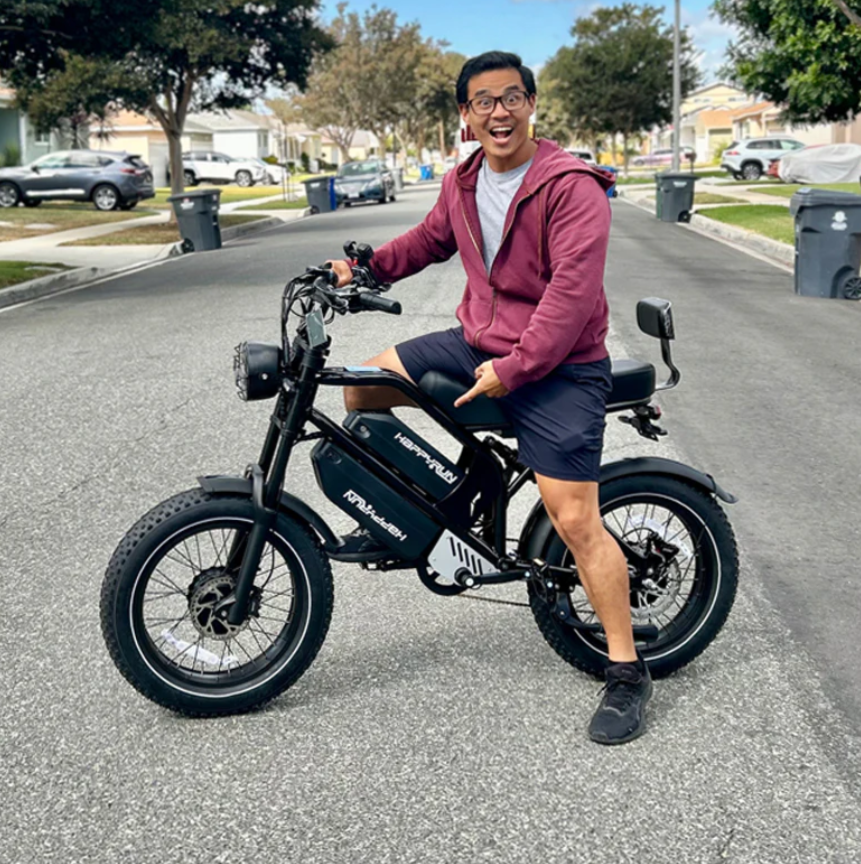
A clear example of this integration can be seen in the HappyRun G70 Pro.
This is not a low-stakes toy; it is a serious performance machine featuring 5000W peak power from dual motors and a top speed of 36 MPH. With that level of power and a massive 48V 33Ah dual battery system designed for long-range travel, security is critical. Rather than treating technology as an add-on, the G70 Pro incorporates NFC as a fundamental part of its user interaction model.
The bike features an NFC Smart Unlock System that allows riders to start the vehicle with a simple tap using an NFC key card or a smartphone. There is no traditional ignition switch, no mechanical interface exposed to the elements. This design choice is both practical and strategic.
From a hardware perspective, eliminating the ignition barrel reduces mechanical failure points. From a software perspective, it opens the door to future extensibility—identity management, access logs, and digital key control.
This becomes especially relevant when considering performance-oriented use cases. While NFC adds convenience for daily commuting, it becomes even more critical for an electric dirt bike operating in demanding environments. Off-road riding often involves mud, dust, vibration, and unpredictable weather. Fumbling with physical keys—or worrying about debris entering a keyhole—is far from ideal.
The G70 Pro’s sealed, sensor-based ignition system is well suited for these conditions. By relying on proximity-based authentication rather than exposed mechanical components, the system maintains reliability even in rugged terrain. This demonstrates how software-driven design can directly enhance real-world durability.
The User Experience (UX) Transformation
Beyond security, NFC fundamentally reshapes the user experience. It introduces a frictionless interaction model that aligns with how people already use technology in their daily lives. Unlocking a bike becomes as natural as unlocking a smartphone—quick, consistent, and predictable.
This shift reduces cognitive load. Riders no longer think about keys, locks, or ignition procedures. Instead, access becomes implicit, seamlessly integrated into the riding workflow. In UX terms, the technology disappears into the background, allowing users to focus on the experience itself.
NFC also introduces new possibilities for shared mobility. Because access credentials are digital, they can be managed dynamically. In the future, riders could temporarily grant access by sending a digital key to another user’s device—revoking it just as easily. This concept, already common in software licensing and cloud permissions, becomes feasible for personal transportation.
Such functionality is driven entirely by software logic layered on top of capable hardware. It illustrates how mobility is increasingly shaped not just by motors and batteries, but by user-centric design principles borrowed from the software world.
Future Outlook: What’s Next for E-Mobility Tech?
NFC is only the beginning. As electric motorcycles continue to integrate digital systems, deeper connections with broader IoT ecosystems are inevitable. Battery status, usage data, and diagnostics could surface on home dashboards or fleet management platforms. Authentication systems may integrate with biometric verification or multi-factor access control.
For companies operating at the intersection of software development and hardware innovation, this represents a significant opportunity. Vehicles are becoming nodes in a connected network—generating data, responding to software updates, and interacting with other smart systems.
The evolution of the electric motorcycle industry mirrors trends already seen in other technology sectors. Hardware becomes a platform. Software defines the experience. Security, usability, and integration become as important as raw performance.
The HappyRun G70 Pro serves as a compelling example of this direction. By embedding NFC-based access into a high-performance electric motorcycle, it demonstrates how thoughtful software integration can enhance security, usability, and reliability—all without complicating the user experience.
As smart mobility continues to mature, the boundary between transportation and software will only grow thinner. NFC is not the end goal—it is the foundation.
Conclusion
The integration of NFC technology into the electric motorcycle industry is more than a fleeting trend; it is a necessary evolution for modern mobility. By adopting the secure, user-centric protocols found in software development, manufacturers are elevating the riding experience to meet the demands of a digital-first world.
The HappyRun G70 Pro exemplifies this shift, demonstrating that robust security and seamless usability can coexist, even in rugged, high-performance machinery. As technology continues to advance, the synergy between code and components will define the next generation of transportation, proving that the smartest vehicle is one that understands its rider.