
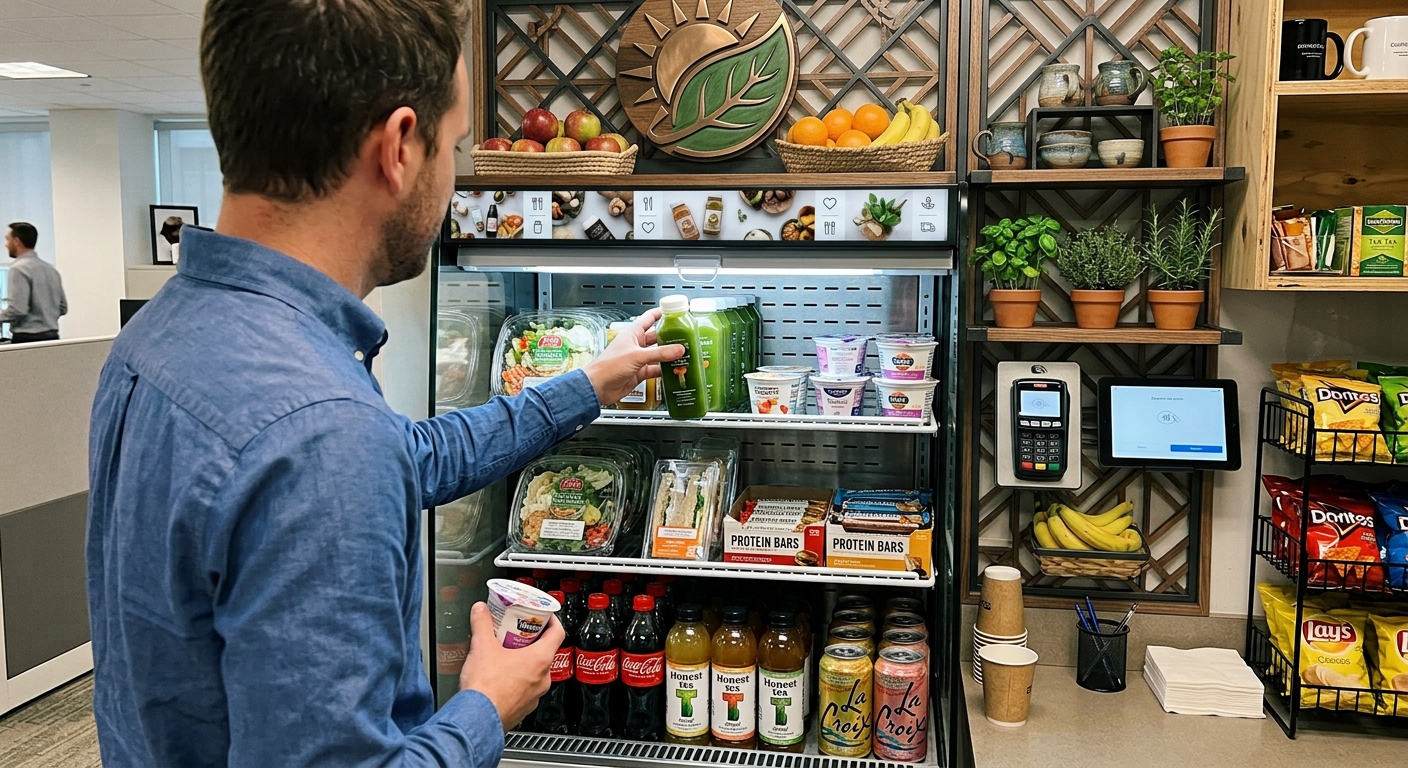
Walk into a workplace break room, and you may notice something interesting without asking a single employee a question. One cooler section is nearly empty, certain snacks disappear before lunch, while other products seem to stay in the same place for days. Those small details can reveal a lot about what employees actually want during the workday.
For businesses in Houston, Texas, this can be especially useful because workplaces do not all follow the same routine. An office with standard working hours may have very different purchasing habits from a warehouse, manufacturing facility, medical office, or business with multiple shifts. A well-managed micro market gives companies a practical way to respond to those differences instead of relying on assumptions.
What a Micro Market Can Tell You About Employees
A workplace micro market is a self-service retail area where employees can choose from snacks, beverages, meals, and other convenience items. Instead of being limited to the few rows of products available in a traditional vending machine, employees can browse shelves, coolers, and other displays before paying through a kiosk or cashless system. That wider selection creates another benefit: it gives operators more information about purchasing behavior.
A workplace might initially stock a mixture of chips, candy, bottled drinks, breakfast items, sandwiches, and healthier snacks. After a few weeks, the sales activity may show that employees consistently prefer certain categories. For businesses considering micro market services, those patterns can help answer a more useful question: What do employees actually want available during the workday?
Product choices can reveal changing preferences
Imagine a Houston office where protein bars regularly sell out, but several varieties of traditional snacks barely move. That doesn’t necessarily mean employees have stopped eating snacks. It may simply mean the original product mix doesn’t match their preferences. Useful signals can include:
-
Products that regularly sell out
-
Items that remain on the shelves
-
Popular beverage categories
-
Breakfast versus lunch demand
-
Purchases during different shifts
-
Interest in healthier or more filling options
-
Seasonal changes in product demand
The important part is looking for repeated patterns rather than making decisions based on one busy day.
How Buying Patterns Can Improve Stocking Decisions
A micro market becomes more useful when purchasing information leads to practical changes. Suppose employees at a Houston workplace consistently purchase breakfast items between 7 and 9 a.m. If those products regularly run out early, simply restocking them at the same level may not be enough. The operator may need to increase the quantity available during the morning or adjust the delivery schedule.
The same idea applies to beverages during Houston's hotter months. Cold drinks may see stronger demand when temperatures rise, while certain food categories may become more popular during different parts of the year. A practical stocking process can involve:
-
Starting with a balanced product selection.
-
Watching which categories gain traction.
-
Identifying products that consistently sit untouched.
-
Giving additional space to reliable sellers.
-
Testing new products in smaller quantities.
-
Reviewing the results before making another change.
This approach avoids the common mistake of treating the original product selection as permanent.
The biggest selection is not always the best one
More products can sound appealing, but filling every available shelf does not automatically make a micro market better. If employees repeatedly buy healthier snacks while several shelves are filled with products they rarely touch, the problem may be the mix rather than the size of the market.
The better question is not, "How many products can we fit?" It is, "Are we using the available space for products employees are actually choosing?" That distinction can make a noticeable difference in how useful the market becomes.
In Houston, Workplaces Can Have Different Patterns
Employee preferences are closely connected to how a workplace operates. A downtown Houston office may have restaurants, coffee shops, and convenience stores within walking distance. A large industrial facility may have far fewer food options nearby. Employees in the second setting may depend more heavily on the workplace market during their shifts.
Working hours matter too. A company with employees arriving before sunrise may need a stronger breakfast selection, while a workplace with evening or overnight shifts could see demand at times when nearby restaurants are closed. This is why purchasing data should always be considered alongside the workplace itself. Employee count alone does not tell you what a micro market should stock.
What Employees Don’t Buy Is Useful Information Too
It’s easy to focus on products that sell quickly and ignore everything else. But slow-moving items can be just as informative. If an item consistently remains untouched, there could be several reasons:
-
Employees don’t like the product
-
The package size is inconvenient
-
The price feels too high
-
The product is poorly positioned
-
A similar item is more popular
-
Demand is seasonal
Removing the item immediately may not always be the right response. Sometimes moving it to a more visible position or trying a different size can provide a better answer. Testing changes gradually makes it easier to understand what is actually affecting sales.
Employee Needs Can Change Throughout the Week
Workplace purchasing isn’t necessarily consistent from Monday through Friday. An employee might buy coffee and breakfast on Monday, grab a quick lunch on Wednesday, and purchase an afternoon snack later in the week. Busy periods, meetings, deadlines, and shift schedules can all affect what people purchase.
For businesses, especially in Houston with multiple departments or shifts, these differences can become even more noticeable. A market that serves everyone with the same product mix may miss those smaller patterns. Reviewing purchasing activity over time can help operators see whether certain products perform better during specific periods.
Purchase Data Should Be Used Carefully
Understanding employee preferences doesn’t require identifying individual buyers. The useful information is generally found in broader patterns. For example, knowing that bottled water sells more quickly than a particular soft drink can help with inventory planning. Knowing which individual employee bought the water is usually irrelevant to that decision.
Keeping the focus on aggregated purchasing trends can make the process more useful while avoiding unnecessary concerns about employee privacy. The goal should be improving the workplace food and beverage offering, not monitoring personal choices.
Better Questions Lead to Better Micro Markets
Before changing a product mix, workplace operators should look beyond the sales report and ask:
-
What type of workplace is this?
-
What hours are employees working?
-
Are there multiple shifts?
-
What food options are available nearby?
-
Which products sell out regularly?
-
Which products are rarely touched?
-
Are employees asking for healthier or more filling choices?
-
Do purchasing patterns change during different seasons?
These questions provide context that raw sales numbers cannot provide by themselves. A product that performs poorly in one Houston workplace could perform very well in another because the employees, schedules, nearby food options, and workplace routines are different.
Building a Micro Market Around Real Employee Needs
A workplace micro market shouldn’t be treated as a collection of shelves that simply needs to stay full. Its usefulness depends on whether the products, services, and stocking decisions reflect how employees actually use the space. For Houston businesses, that may mean offering more breakfast options for early shifts, increasing cold beverage availability during warmer periods, or giving more shelf space to products that employees repeatedly choose.
Empire Vending can help businesses look at their workplace setup and consider how a professionally managed micro market could fit into their daily operations. The strongest approach is usually a simple one: start with a sensible selection, watch what happens, and make changes based on actual employee behavior.
See What a Micro Market Could Do for Your Workplace
A micro market can provide more than another place to buy a snack. When its product selection is adjusted according to real purchasing patterns, it can become a useful part of the workday. For Houston workplaces, understanding employee needs starts with paying attention to the details. Which products disappear first? When does demand increase? What gets ignored? What do employees keep looking for? Those answers can help shape a market that feels less like a generic vending setup and more like a workplace amenity built around the people using it.
Frequently Asked Questions
What is a workplace micro market?
A workplace micro market is a self-service food and beverage area where employees can choose from a wider selection of products than a traditional vending machine. Depending on the setup, it may offer snacks, drinks, fresh meals, breakfast foods, and convenience items through shelves, coolers, and a self-service payment kiosk.
How can a micro market help identify employee preferences?
Purchasing activity can show which products employees choose repeatedly. Operators can look at sales patterns, frequently sold-out products, slow-moving items, popular categories, and changes in demand throughout the day. Over time, these patterns can provide useful information for adjusting the product mix.
Can micro market products be changed over time?
Yes. Product selection can be adjusted as purchasing patterns become clearer. Slow-moving products can be reduced or replaced, while popular categories can receive more shelf space. New products can also be introduced in small quantities to see whether employees respond positively before making them a regular part of the selection.
Are micro markets useful for Houston workplaces?
They can be, particularly when the setup reflects the workplace's actual schedule and food needs. A Houston office with standard working hours may have different requirements from a warehouse, manufacturing facility, or business operating multiple shifts. Product selection and service can be adjusted around those differences.
What should a company track in a micro market?
Useful information includes product sales, frequently sold-out items, slow-moving products, popular categories, and purchasing patterns at different times. Employee feedback can also add context. Looking at several of these factors together gives a clearer picture than focusing on one product or one day's sales.
Do micro markets only provide snacks?
No. Depending on the setup, they can include cold beverages, fresh meals, breakfast items, healthier snacks, desserts, and other convenience products. The selection can be tailored around what employees are most likely to purchase during their workday.
How often should a workplace change its micro market selection?
There is no single schedule for every workplace. Operators can review purchasing patterns regularly and make changes when certain products consistently underperform or demand changes. Seasonal shifts, employee feedback, and changes to workplace schedules can also indicate when the product mix needs attention.