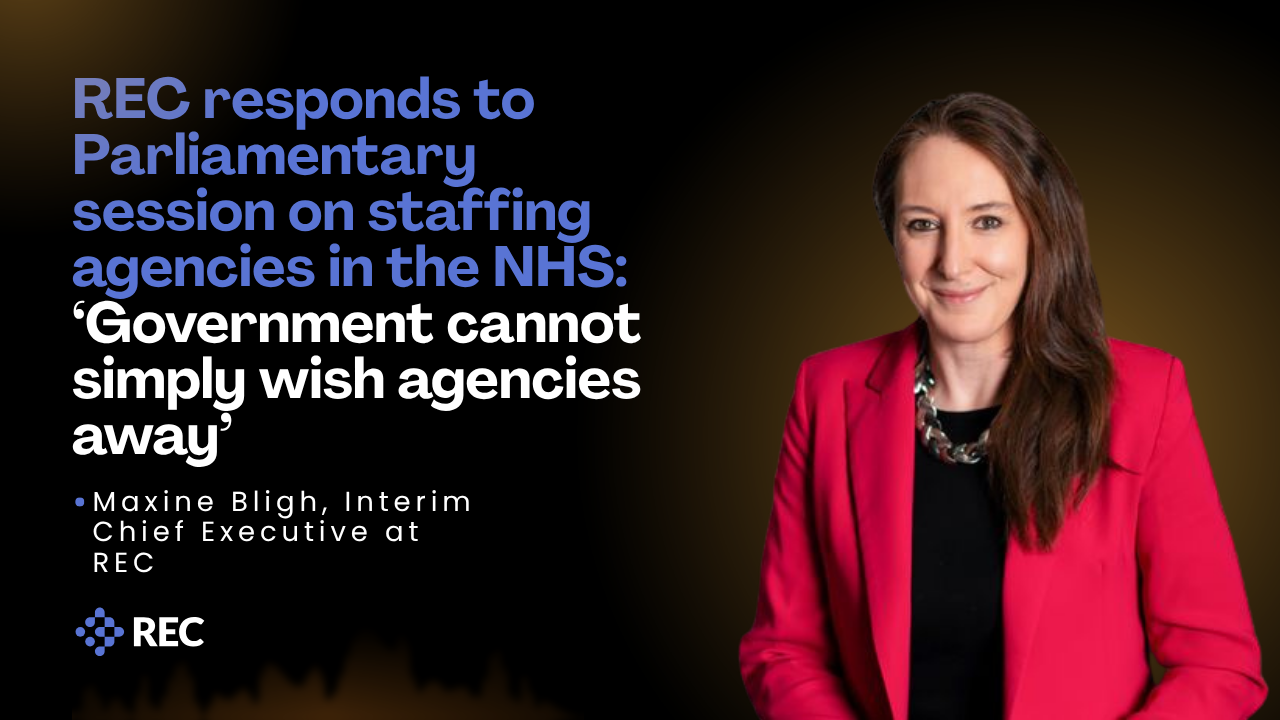
“The Minister’s remarks reflect the government’s continued determination to reduce agency spending in the NHS, but they do not address the underlying workforce challenges that make temporary staffing necessary in the first place.
“Yesterday’s debate again highlighted the contradiction at the heart of current policy. Ministers remain committed to eliminating agency spending, yet the workforce plan intended to underpin that ambition has still not been published. Healthcare staffing agencies work with NHS professionals every day and have direct insight into why clinicians move between permanent, Bank and temporary work. Yet they were not among the more than 100 organisations involved in discussions about the workforce plan, according to information provided by the Department this summer.
“Patient safety is best served by addressing workforce shortages and retention challenges, not simply by reducing one route through which staffing gaps are currently filled. Trusts rely on temporary workers to step up at short notice and keep wards open, services running and appointments on track because of years of challenges in recruiting and retaining enough permanent staff. The Minister’s comments raise the obvious question of how the NHS, which is recruiting fewer permanent staff and reducing headcount, maintains services, while also reducing agency use. We agree that agency workers are certainly not a substitute for a sustainable workforce strategy, but neither can ministers simply wish them away. Cutting off one source of staffing does not automatically create another.”
Maxine Bligh added:
“The government must also consider the cumulative impact of wider labour market reforms. Measures that reduce flexibility in temporary staffing models risk making it harder for providers to fill shifts at short notice, at a time when services remain under significant pressure. The guaranteed hours policy risks making agency roles less available and less attractive, deepening the recruitment and retention crisis across health and social care. Guaranteed hours will add costs, bureaucracy and legal risks that make it harder to deploy temporary staff at short notice. When health and social care providers cannot fill gaps quickly, patients pay the price through reduced access to safe and timely care. At a time when services are already under intense pressure, reducing workforce flexibility risks leaving patients to bear the consequences.
“Ministers must focus on partnership, not confrontation, with compliant, regulated and care-focused agencies if they are serious about cutting costs and improving patient care, or risk ignoring the reality that workers increasingly expect flexibility in how and when they work. Any temptation to dismiss agency staffing with simplistic claims about 'rip-off' costs misses the bigger picture.”