
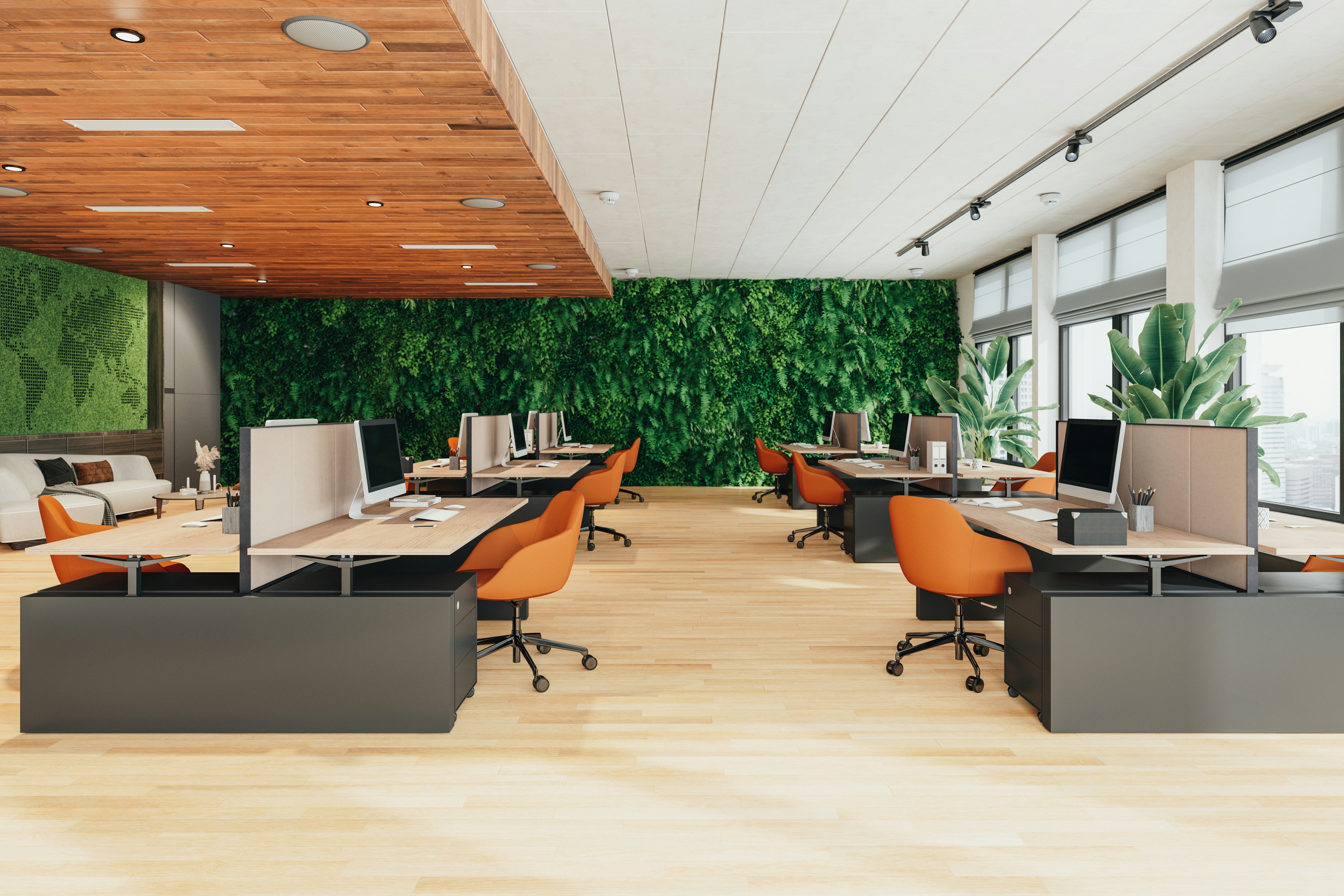
An office can produce a surprising amount of waste and use significant amounts of energy, but there are plenty of practical changes that can make a difference. From recycling and reducing energy use to encouraging greener travel, we look at ways to make your office sustainable and how you can work this into your everyday office.
Why should your office become more sustainable?
There is a clear environmental reason for businesses to reduce their impact. In 2025, buildings and product use accounted for 22% of the UK's net greenhouse gas emissions.
For businesses, sustainability can also have financial and reputational benefits. Reducing energy use can lower bills, while cutting waste can reduce disposal costs.
It can also show employees, customers and potential clients that the company takes its environmental responsibilities seriously.
How can you reduce energy use?
Look at how your office uses electricity throughout the day. Simple measures such as switching off lights in empty rooms, using energy-efficient LED bulbs and ensuring computers are not left running overnight can all help.
Heating and cooling should also be considered. Keeping doors and windows closed when heating is on, improving insulation and using smart heating controls can prevent energy being wasted.
It is worth reviewing energy bills regularly to identify where the biggest opportunities for savings might be.
Could you make recycling easier?
Recycling should be simple if you want employees to use the correct bins.
In England, workplace recycling rules changed in March 2025. Businesses must separate dry recyclable materials, food waste and non-recyclable waste, with micro-firms having until March 2027 to comply.
This is particularly important when you consider the scale of commercial waste. England generated around 32.6 million tonnes of commercial and industrial waste in 2023.
Clearly labelled bins placed in convenient locations can encourage better habits. It can also help to explain what can and cannot be recycled rather than expecting employees to work it out themselves.
Can you reduce single-use products?
Look around the office and identify items that are regularly thrown away.
Disposable cups, plastic bottles, takeaway containers and unnecessary packaging can quickly add up. Providing reusable mugs, glasses and water bottles can encourage employees to avoid single-use alternatives.
The same principle applies to the kitchen. Reusable plates, cutlery and containers can help reduce the amount of waste produced each day.
These changes may seem small, but sustainability often comes down to making better choices consistently.
Should you encourage greener travel?
Travel can be another important area for businesses to address.
Encouraging employees to walk or cycle where practical can reduce car journeys. Providing secure bike storage, showers or changing facilities can make cycling to work more appealing.
For longer journeys, public transport and car sharing can also provide alternatives to travelling alone by car.
Flexible or hybrid working may reduce commuting for some employees too, although businesses should consider the wider environmental impact of home working before assuming it is always the greener option.
How can employees get involved?
Sustainability works best when it becomes a shared responsibility rather than something imposed by management.
Consider creating a small sustainability team made up of employees from different departments. They could suggest improvements, organise initiatives and monitor progress.
Simple challenges can also make sustainability more engaging. For example, an office could have a month focused on reducing paper use or encouraging greener travel.
Giving employees a voice can make them more likely to support changes and suggest ideas of their own.
Could your suppliers be greener?
Sustainability does not stop at the office door.
Consider the companies you buy from and ask whether they share your environmental values. This could include cleaning products, office furniture, stationery, catering and technology.
Buying durable products rather than cheaper items that need regular replacement can reduce waste and potentially save money over time.
You could also consider local suppliers where appropriate, particularly when this reduces unnecessary transportation.
How can you measure your progress?
Finally, give your sustainability efforts something to work towards.
Measure energy use, waste, recycling and other relevant areas before introducing changes. You can then review the figures later to see whether your efforts are making a difference.
The aim does not have to be perfection. A sustainable office is built through a series of practical changes that become normal working habits.
By making sustainability part of everyday office life, businesses can reduce waste, lower their environmental impact and create a workplace where employees feel they are contributing to something worthwhile.