
Recruiting more apprentices will only address part of manufacturing’s skills challenge unless employers also make room for consistent induction and practical learning, according to Greg Wood, head of manufacturing at Portakabin.
In commentary supplied to Onrec, Wood argues that new employees need suitable spaces to develop technical skills without training continually competing with live production.
A skills problem beyond recruitment
Make UK’s 2025 Industrial Strategy Skills Commission report described 55,000 unfilled long-term manufacturing vacancies and estimated £6 billion in annual lost output. Those figures describe the position reported in 2025, rather than a new October 2026 vacancy count.
Wood’s argument is that recruitment campaigns and apprenticeship reform can increase the supply of people, but employers must also consider the conditions in which those people become confident and capable in their roles.
“Manufacturers put a lot of energy into attracting people, but the environment those people walk into on day one matters just as much.”
Greg Wood, head of manufacturing, Portakabin
Planning the learning environment
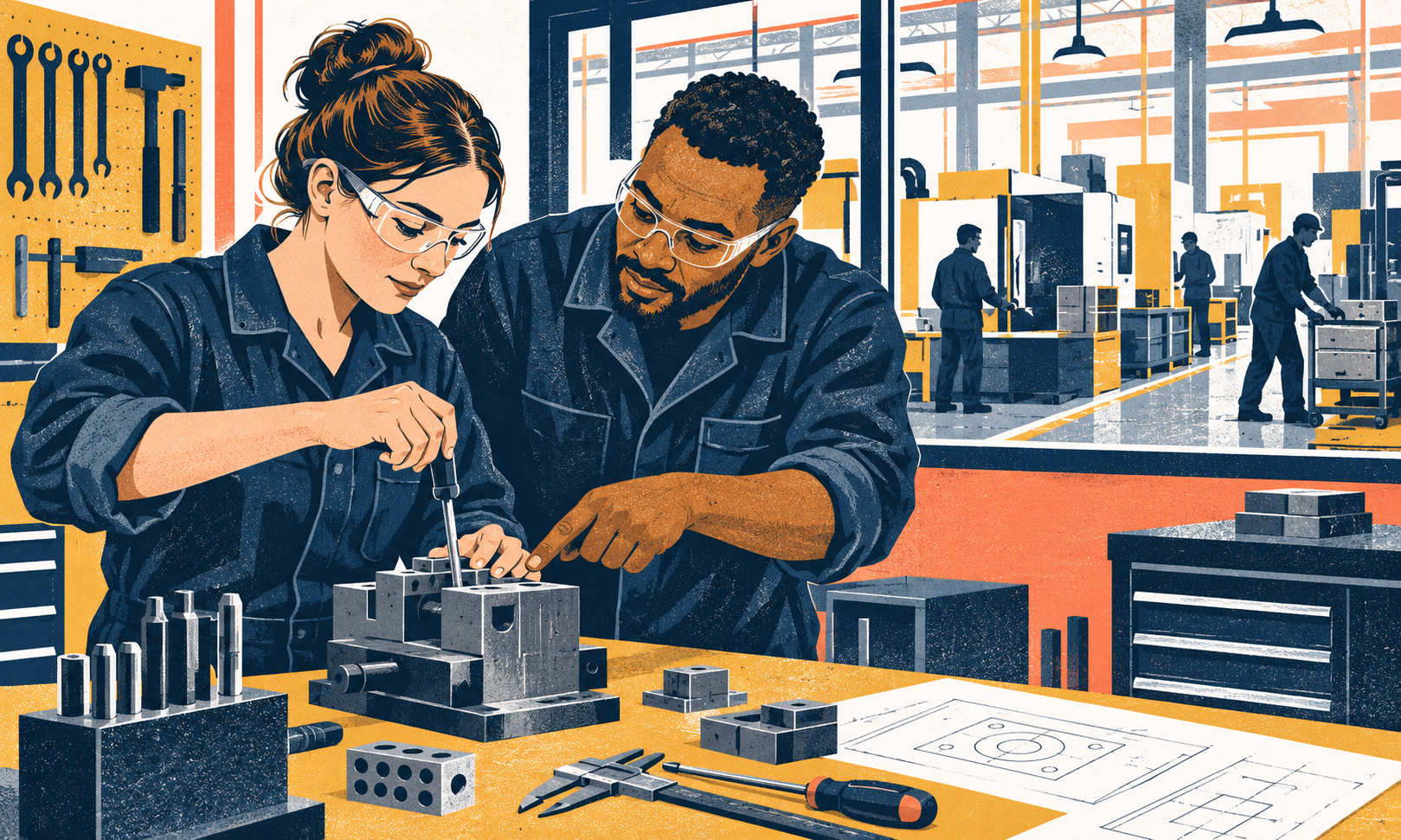
Wood advocates dedicated on-site training space so induction and continuing development can take place consistently. He says employers should consider how training fits around production schedules and whether facilities support the learning they expect new starters to undertake.
His perspective comes from a supplier of modular buildings, including training facilities. The commercial interest is relevant: additional buildings are one possible response, while employers need to assess their own space, training design and operational requirements.
Why it matters for hiring teams
A hiring plan should connect the number of recruits with available trainers, protected learning time and suitable facilities. Reviewing those needs before recruiting can help HR and operations teams identify where an expanding intake may put pressure on existing provision.
Source: commentary supplied by Portakabin and Make UK’s 2025 Industrial Strategy Skills Commission report. Image: editorial illustration created for Onrec.