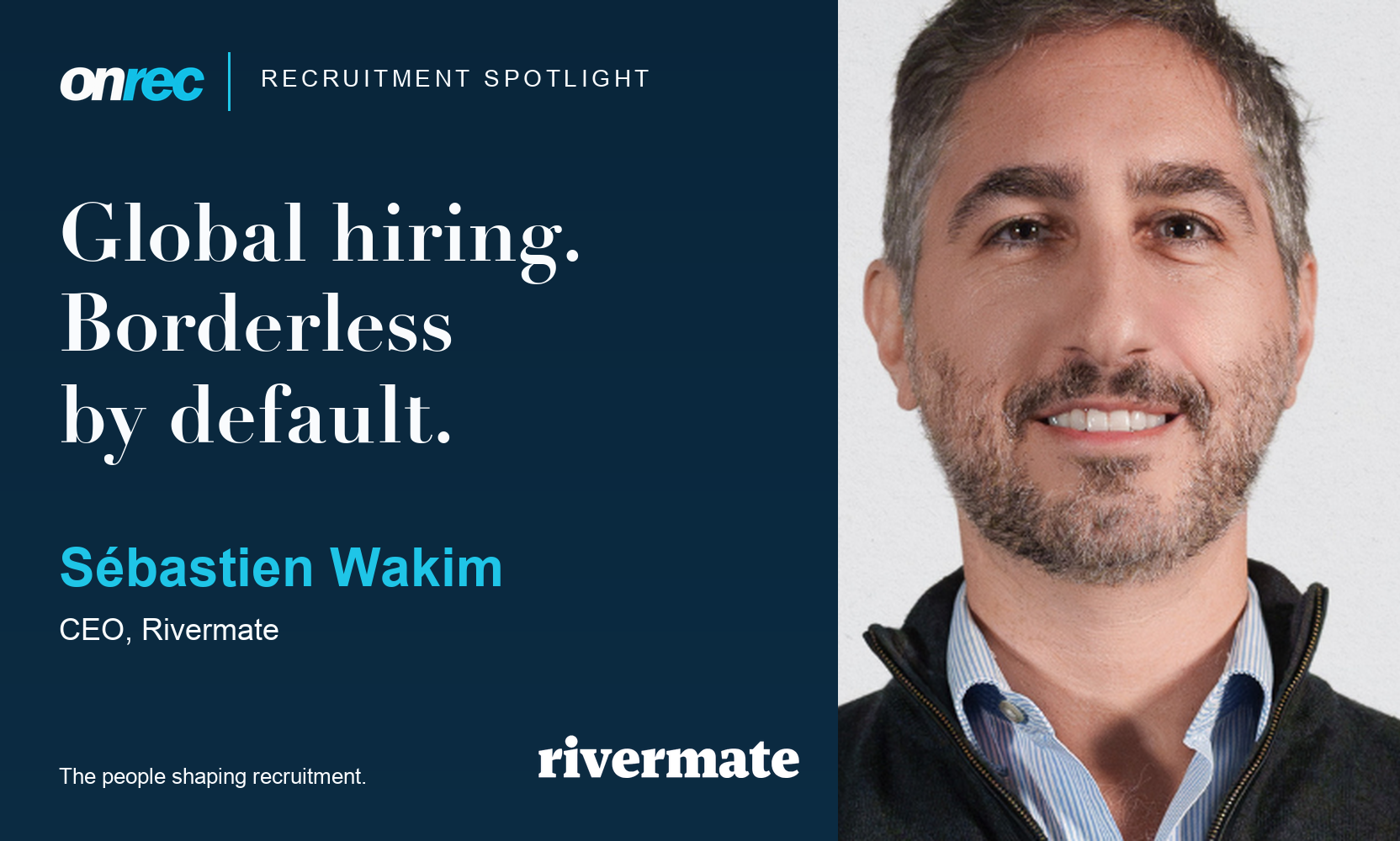
Hiring across borders opens up new talent pools, but the employment details still need local attention. In this interview, Rivermate discusses where Employer of Record services fit, what agencies can offer clients, and why human support matters after a contract is signed.
“Salary gets a candidate's attention, but it's rarely what keeps them.”
Rivermate
Opening up global hiring
What does Rivermate do?
Rivermate is an Employer of Record (EOR) provider. We help companies hire, employ and pay talent in more than 180 countries without opening their own local entities. In practice, a company can decide to hire someone in, say, Portugal, Mexico or Vietnam, and Rivermate becomes that person's legal employer on the ground - handling the contract, payroll, benefits and compliance - while they work day to day as part of the client's team. We do this through 38 owned entities rather than a patchwork of local partners, we can onboard a new hire in a few days, and we've built that infrastructure over 15+ years, since 2010, bringing together teams of local experts rather than starting from a single head office.
How have attitudes to international hiring changed?
A few years ago, international hiring was mostly something large enterprises did, usually after setting up a local entity first. That's changed: Employer of Record and Contractor of Record models have moved from a niche corner of global expansion into the mainstream. Remote work made companies comfortable managing distributed teams, and EOR players removed the need to open an entity just to hire one or two people in a country. We're now seeing companies of all sizes treat international hiring as a genuine option from day one, rather than a later-stage expansion project.
What challenges arise with a first international hire?
The most common challenge is underestimating just how much variation there is country to country, not only tax and social contributions, but notice periods, holiday entitlement, sick pay and termination processes, plus softer things like expectations around communication and working hours. A hire that looks straightforward on paper can come apart if any one of these is handled generically instead of locally. The second challenge is speed: without the right infrastructure, a first international hire can take weeks to set up properly. The third is simply not knowing what “normal” looks like in a new market, which shapes whether an offer is actually competitive.
Getting the employment foundations right
When does an EOR make more sense than a local entity?
An EOR makes sense when a company is testing a market, hiring a small number of people, or needs to move quickly. Setting up an entity takes time and ongoing cost regardless of headcount, so for a few hires in one market, or several hires across different markets at once, an EOR is usually the faster, more cost-effective route. A local entity starts to make more sense once headcount in a country is large enough that the cost of running it is offset by no longer paying per-employee EOR fees.
For employers weighing an international hire, WorkMotion offers an EOR route across 160+ countries, handling contracts, payroll, statutory contributions and local compliance without requiring the client to open an entity. Its platform also supports direct hiring and contractor management, so the right arrangement can change as a team or market develops.
Complete the sentence: The future of global hiring is…
borderless by default, not by exception.
Which compliance risks do employers underestimate?
Two things come up repeatedly: termination rules, and worker classification. In many countries, ending an employment contract isn't as straightforward as it is in the employer's home market, and getting it wrong can mean significant penalties. Classification is the other one. Treating a Contractor of Record arrangement as a shortcut when the role should really sit under Employer of Record is one of the more expensive mistakes we see, especially as more countries tighten how they define genuine independent-contractor work.
What opportunities does global hiring create for agencies?
Global hiring lets recruitment agencies widen the pool of candidates they present to clients, without the client needing a legal presence in that candidate's country. Increasingly, this is also becoming part of the advice agencies are expected to give. Clients often know they need skills in a particular market before they know what employment infrastructure that requires, so agencies who can ask the right structural questions, and pair clients with the right compliance and payroll support, end up delivering more than just a placement.
How important are local benefits and employee experience?
Salary gets a candidate's attention, but it's rarely what keeps them. Benefits and employment conditions that feel normal and appropriate for their market matter just as much - healthcare, pension contributions, parental leave, and so on. A generous salary paired with unfamiliar or mismatched benefits can still lose out to a lower offer that feels locally exciting. This is one area where in-market expertise, rather than a generic global policy, makes a real difference.
Technology and the future of global work
Where can technology help — and where are people essential?
Technology can genuinely simplify the administrative side of global employment: payroll runs, contract generation, compliance tracking. Where human expertise stays essential is judgment: interpreting a grey area in local law, handling a sensitive termination, or advising a client on how to structure an offer in a market they don't know well. We see AI as freeing up our specialists' time for that kind of work, not replacing it.
Can borderless hiring grow alongside a return to the office?
We think it will keep growing, though its shape may change. Return-to-office policies address where people work day to day, not where employers are willing to look for talent. A company can ask its own headquarters staff to come in three days a week while separately hiring a specialist elsewhere for a role local talent can't fill. Those two trends aren't really in conflict, they're answering different questions.
What comes next for Rivermate and global hiring?
We think the market is entering a phase where fast onboarding is simply the baseline expectation, not a differentiator. What's being tested now is whether providers actually show up for the people they employ. That means handling unforeseen circumstances such as workplace accidents, sudden changes in local employment law, or employee disputes, not just processing payroll and filing compliance paperwork, but staying reachable and genuinely supporting them.
Our mission is to build and operate the world's most trusted global work infrastructure platform based on deep local expertise and exceptional human service: every client gets a dedicated account manager and direct access to real people, because how quickly and personally we show up matters just as much as whether we can operate in a given country at all.
We plan to keep growing our owned-entity footprint and in-house expertise market by market, without losing that personal thread as we scale. We expect global hiring to keep becoming the default way companies think about talent, and buyers to get a lot more discerning about who they trust to do it, which is exactly why we don't think this is a business that can be run at arm's length.
Quick fire with Rivermate
Remote, hybrid or office
All three, depending on the role – that flexibility is exactly what we help our clients offer.
The most exciting market for international hiring right now?
Markets where demand for a skill is outpacing local supply. That's exactly where being able to hire across borders, instead of being boxed into one talent pool, makes the biggest difference.
The biggest misconception about Employer of Record?
That it's mainly about how many countries a provider can list. The real differentiator is how they actually operate once someone is hired, through owned entities and real local expertise, not a patchwork of partners.
One piece of advice for a company making its first international hire?
Get the compliance right before you get excited about the candidate, because the offer only matters if you can actually make it compliantly.