
Ghosting after an interview is the most common complaint candidates make about hiring, according to Dataford’s analysis of more than 800,000 candidate-submitted interview reports. The article examines the patterns behind the data and the practical steps recruiters can take to improve candidate experience.
Key takeaways
- Ghosting is the most frequent complaint in candidate interview reports and is often easier to address than more structural hiring issues.
- Candidates appear more tolerant of a long process when recruiters communicate clearly and keep to agreed update dates.
- Closing every interview loop, automating status messages and assigning ownership for next steps can significantly improve the candidate experience.
How the data was collected
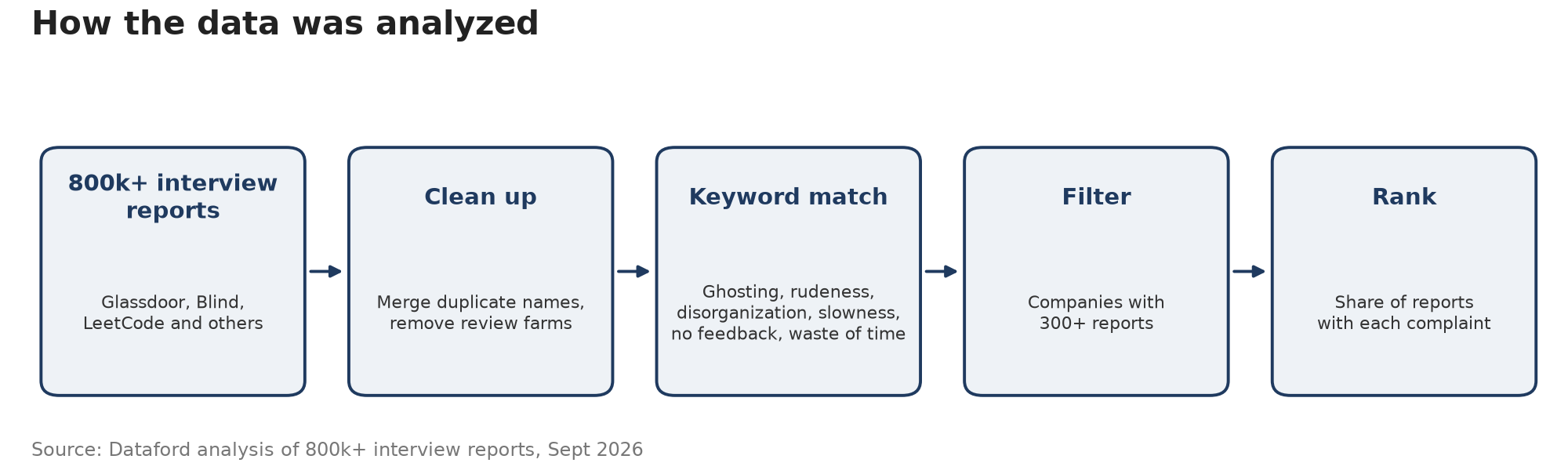
Our interview reports are write-ups of real interview processes submitted by candidates, gathered from Glassdoor, Blind, LeetCode and other sources. For this analysis we read each report's description of the process and flagged phrases that point to a concrete complaint. We tracked six types: ghosting, rudeness, disorganization, slowness, no feedback and waste of time.
This is keyword matching on what candidates say happened. It does not try to score tone or mood, so a report only counts when the candidate describes a specific problem.
To keep the rankings fair, we only ranked companies with 300 or more reports. We merged near-duplicate company names and removed review-farm entries. The snapshot is from 4 September 2026.
Key findings
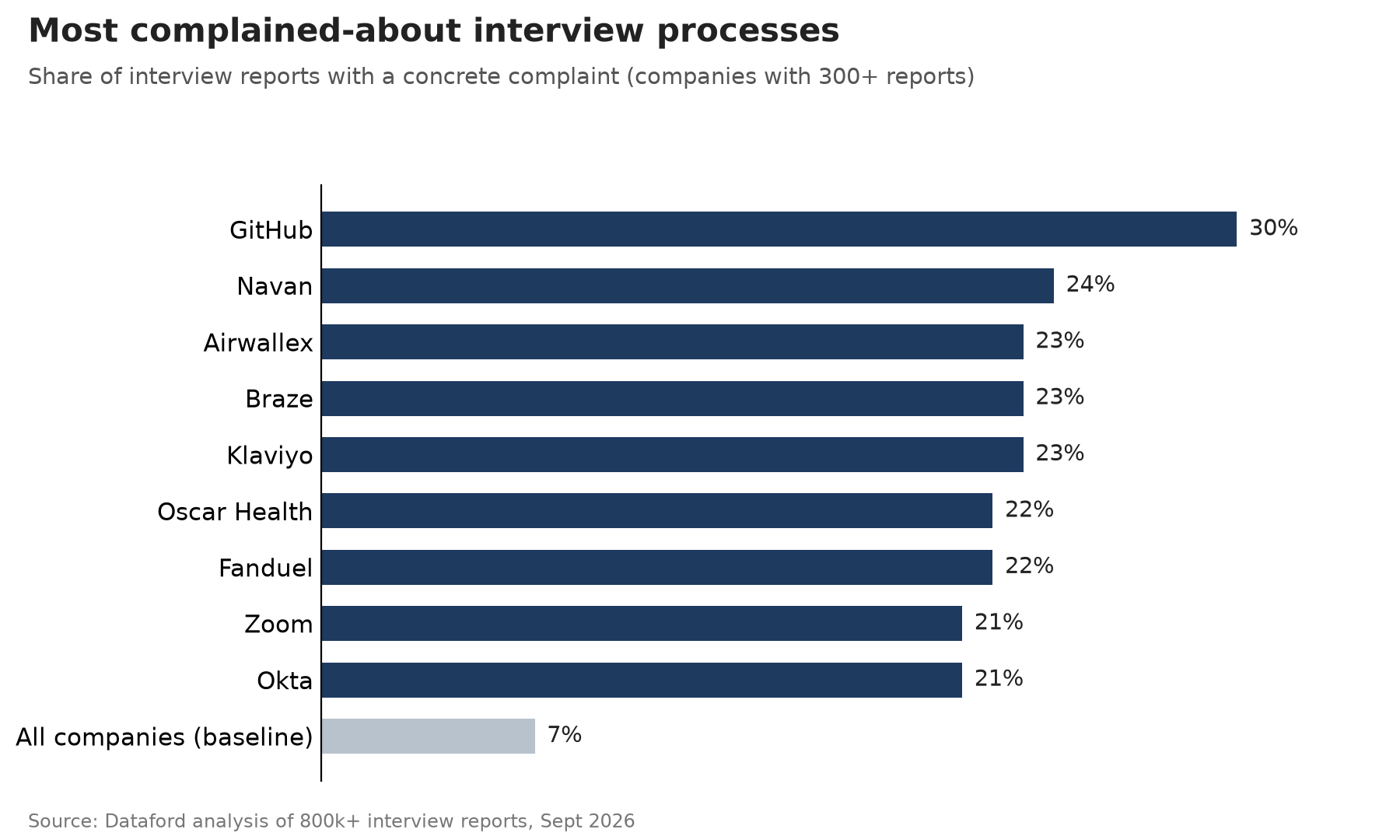
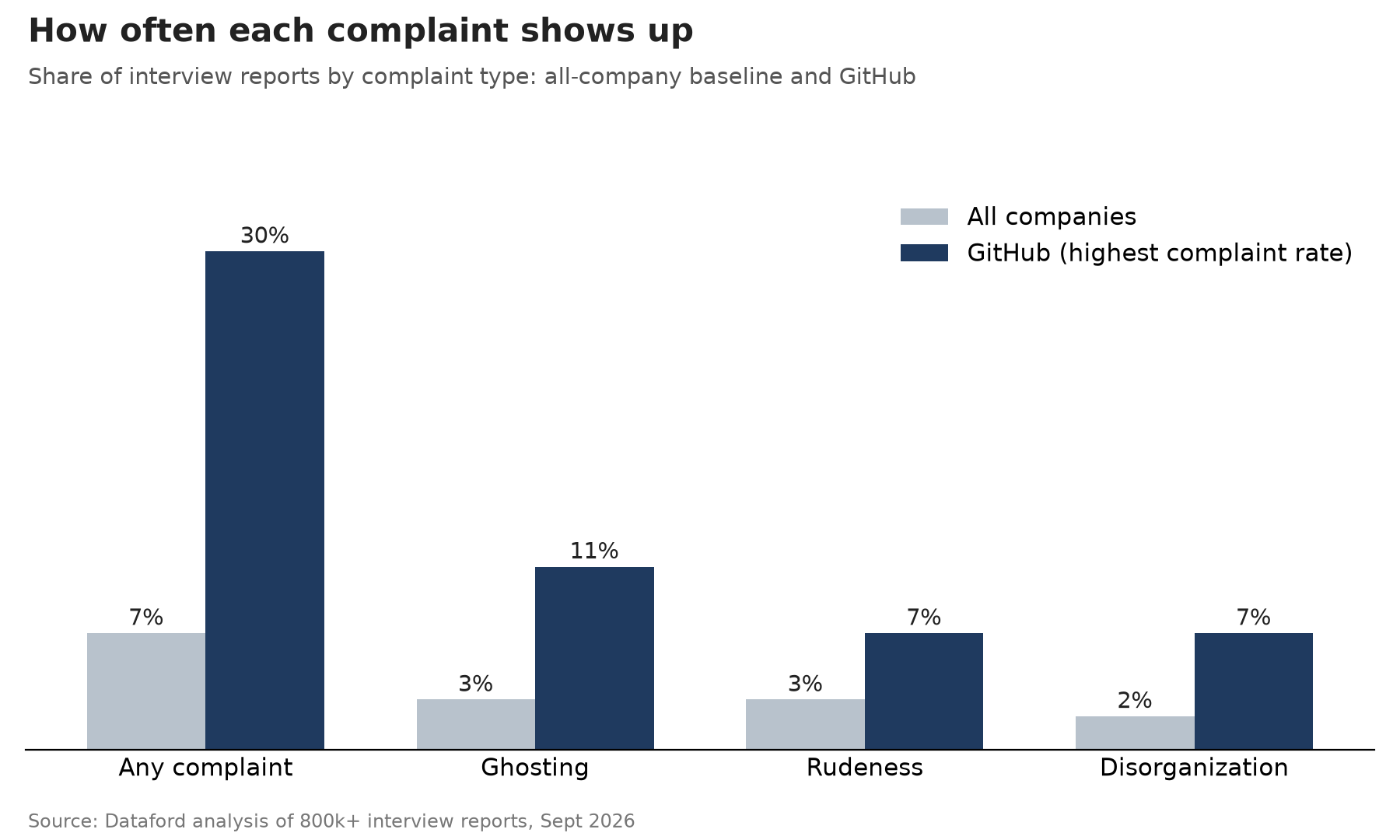
- About 7% of interview reports contain a complaint. At the most complained-about companies the share is three to four times higher. GitHub tops the list at 30%, followed by Navan at 24% and Airwallex, Braze and Klaviyo at 23%. Put another way, nearly one in three GitHub interview reports describes a concrete problem.
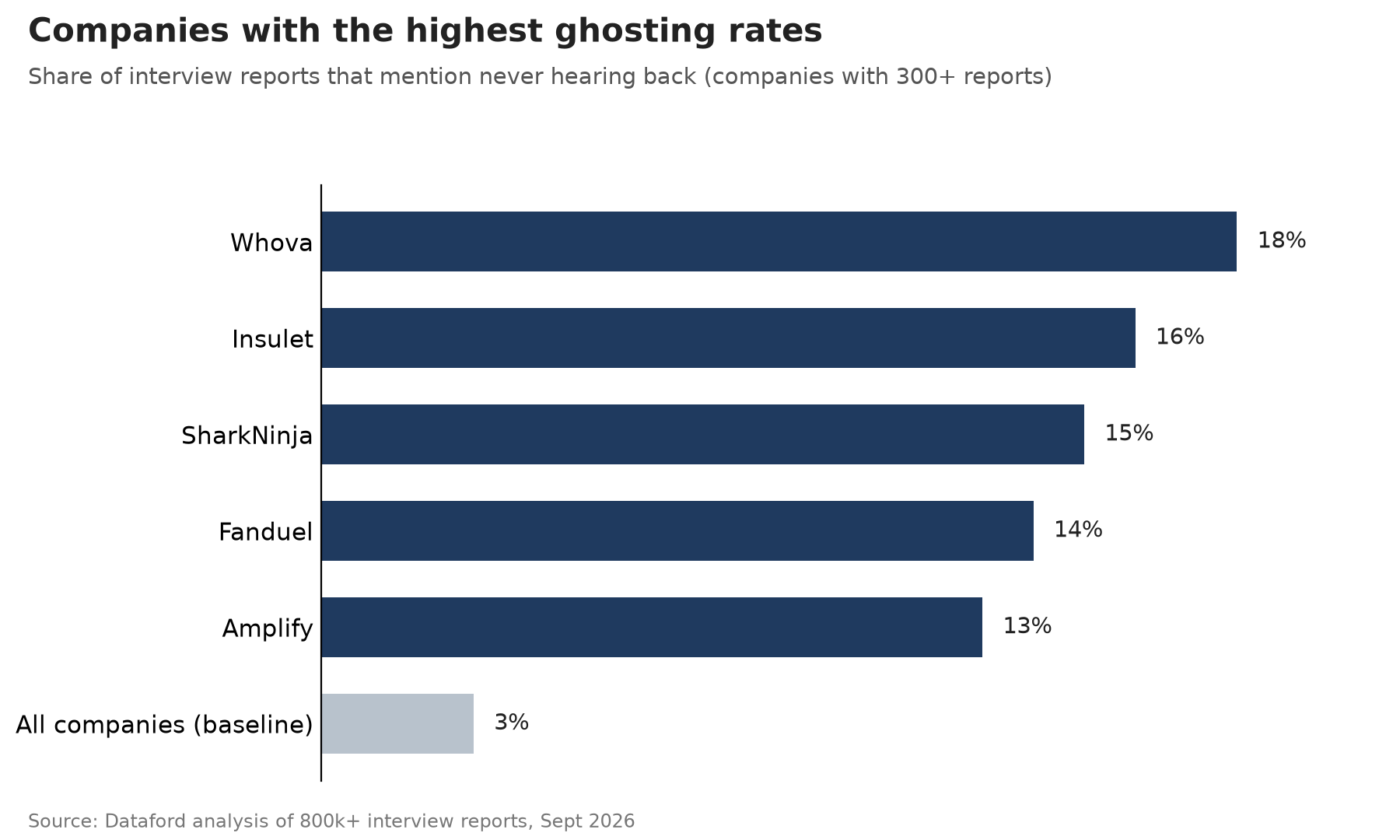
- Ghosting is the biggest single complaint. Across all companies, about 3% of reports mention never hearing back. Among the 25 most complained-about companies, about half have a ghosting rate of 10% or higher. Whova has the highest ghosting rate we recorded at 18%, followed by Insulet (16%), SharkNinja (15%) and Fanduel (14%).
- Rudeness and disorganization come next. The baseline is 3% for rudeness and 2% for disorganization. In the top 25, rudeness runs from 5% to 11% and disorganization from 2% to 9%. Whova also has the highest rudeness rate of any company we ranked, at 24%.
- Slow processes barely show up. The highest slow-process rate at any company is 3%, at Cengage. My read is that candidates will put up with a long process as long as someone keeps them updated.
- Missing feedback is its own complaint. GitHub has the highest no-feedback rate in the top 25 at 8%. Every other company in the top 25 is at 4% or lower.
Trends
- Ghosting drives most complaint totals. It is the largest single complaint at nearly every company in the ranking. For a company with a high complaint rate, better follow-up is often the quickest way to bring it down.
- Ghosting happens at well-resourced companies too. Most of the top 25 are large, well-known employers with full recruiting teams, so headcount alone does not explain it.
- The problem crosses industries. Most of the top 25 are software and internet companies, and the list also includes consulting, insurance, banking, sports and gaming.
- Candidates complain about silence more than speed. Slowness stays close to zero everywhere, while ghosting reaches double digits at about half of the top 25.
- The same names show up across columns. Whova leads on both ghosting and rudeness, and GitHub ranks high on ghosting, no feedback and overall complaints.
A clear answer, even a no, is the easiest part of the candidate experience to fix.
What recruiters can do
- Close every loop. Send a decision to every candidate who interviewed, including the ones you are turning down. Two lines is enough.
- Give a date at the end of each interview. Tell the candidate when they will hear back, and reply by then, even if the update is that you need another week.
- Automate the rejection. Most applicant tracking systems can send a message when a candidate's status changes. Turn it on for every stage after the first interview.
- Share one piece of feedback when you can. A single sentence on what the panel was looking for helps, and candidates notice when there is none.
- Brief your interviewers. Rudeness and disorganization are the next most common complaints. A short brief on the role, the format and who covers what cuts down on both. Make sure one person owns the next step after every interview.
- Read what candidates say about you. Check your own interview reviews every quarter and look for phrases like “never heard back”.
The takeaway
Candidates remember how a process ended. A clear answer, even a no, is the easiest part of the candidate experience to fix. None of the steps above needs new budget or headcount. Most of them come down to a template, a calendar reminder or a setting in your applicant tracking system.
The full ranking and methodology are on the Dataford blog.
About the author: Amney Mounir works in Product Growth at Meta and founded Dataford, growing it from 0 to 50,000 users. He shares career and interview advice with more than 85,000 followers on LinkedIn.